Who regulates septic tanks in Highland?
Highland is in Scotland, so private sewage discharges are regulated by SEPA (Scottish Environment Protection Agency). In Scotland, every private sewage discharge needs authorisation from SEPA. Since 1 November 2025 this has come under the Environmental Authorisations (Scotland) Regulations 2018 (EASR), which replaced the old Controlled Activities Regulations (CAR). Existing CAR registrations moved across automatically. You can register a discharge from up to 10 domestic properties, or a population equivalent of up to 50, online. Discharges to a phosphate-sensitive catchment or a freshwater loch need a permit. A new or replacement system also normally needs a building warrant from the council.
Building approval for a new or replacement system comes from The Highland Council. Read more in our Scotland regulations guide.
Ground and soil conditions
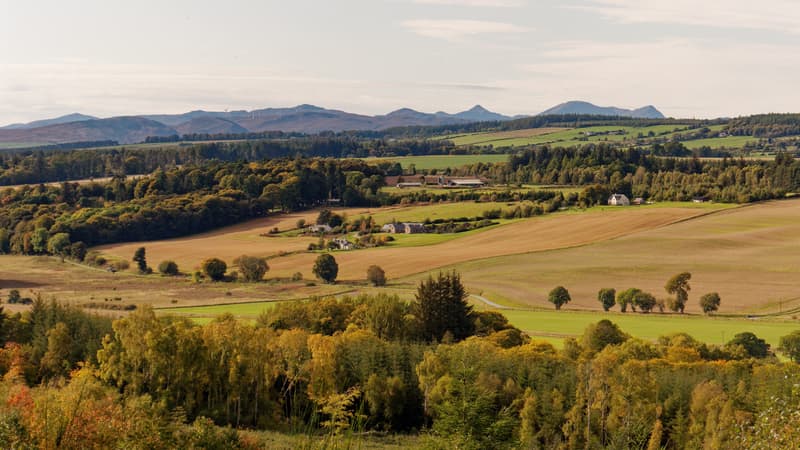
Much of the Highlands has thin, acidic soils and peat sitting over hard rock, with very high rainfall in the west. That makes percolation tests especially important: on rock or waterlogged peat a conventional soakaway can fail, and installers often look at a treatment plant with a higher standard of treatment, a raised or mound drainage field, or a discharge to a watercourse. There are better-draining sands and gravels in some straths and along parts of the Moray Firth coast, so two neighbouring properties can need very different systems.
Protected waters and environmental checks
SEPA notes that discharges to a phosphate-sensitive catchment or to a freshwater loch need a permit rather than a simple registration, which matters in a region with so many lochs. The River Spey through Badenoch and Strathspey is a Special Area of Conservation, and the inner Moray Firth is protected too, so expect SEPA to look closely at where treated effluent ends up.
Local practicalities
Distance is the big cost factor. Remote glens, single-track roads and island properties on Skye or in Caithness and Sutherland can mean extra travel, smaller machinery or ferry costs for the digger and the tank. Ask installers to show travel and plant hire as separate lines so you can compare quotes fairly.
Towns and villages covered
Installers we work with cover Highland, including:
- Inverness
- Nairn
- Dingwall
- Fort William
- Aviemore
- Thurso
- Wick
- Portree
- Ullapool
- Golspie
- Kingussie
- Dornoch
The list isn't exhaustive. Enter your postcode and we'll find installers who cover your property.
What it typically costs
The figures below are national guide prices from installers' published guides and merchants' list prices, because there's no reliable published data for Highland on its own. Expect your quote to reflect the local ground, access and discharge route described above.
- Like-for-like septic tank replacement: roughly £3,000–£7,000
- New septic tank with drainage field: from about £5,500; commonly £5,000–£15,000
- New drainage field: £3,000–£7,000
- Sewage treatment plant unit only: about £2,190–£2,700 inc VAT (equipment only)
- Sewage treatment plant, supplied and installed: commonly £7,500–£15,000
- Emptying: Scottish Water charges £254.40 for a scheduled household de-sludge (2026–27)
Other areas in Scotland
Moray · Aberdeenshire · Perth and Kinross · Argyll and Bute · Dumfries and Galloway · Scottish Borders · Angus
Frequently asked questions
Do I need a building warrant for a new septic tank in the Highlands?
Yes. In Scotland a new or replacement private drainage system normally needs a building warrant from the local authority, here The Highland Council, as well as SEPA authorisation for the discharge. A good installer will either handle both or tell you exactly what they need from you.
My croft has peat ground. Can I still have a septic tank?
Possibly, but deep peat and waterlogged ground often fail a percolation test. Common alternatives are a packaged treatment plant discharging to a watercourse (with SEPA authorisation) or an engineered or raised drainage field. A site assessment and percolation test will decide it.
How much does septic tank replacement cost in Highland?
We don't publish made-up local prices. Installers' published guides put a like-for-like replacement at roughly £3,000–£7,000, a new tank with a drainage field at commonly £5,000–£15,000, and a treatment plant at commonly £7,500–£15,000 fitted. Ground and access in Highland can move your price either way, so compare site-visit quotes.