
If your septic tank is cracked, leaking or simply worn out, the honest answer to "how much will a new one cost?" is that it depends far more on the ground and the drainage field than on the tank itself. Installers' published guides put a straightforward like-for-like replacement at roughly £3,000 to £7,000, plus emptying and removing the old tank, while a full replacement that includes a new drainage field typically runs £7,000 to £15,000, and difficult sites can go past £20,000. This guide is written for homeowners in England, Scotland, Wales and Northern Ireland, and every figure below links to the installer, merchant or official body that published it.
The short answer: four common scenarios
Clear Stream Drainage, an installer in Cornwall and Devon, publishes guide totals for the jobs it sees most often. They line up closely with figures from installers elsewhere in England, so they're a sensible starting point wherever you live.
| Scenario | Typical total | Source |
|---|---|---|
| Tank replaced, existing drainage field kept | £3,500–£6,000 | Clear Stream Drainage |
| Like-for-like septic tank replacement (Hampshire and Surrey) | around £3,000–£7,000, plus removing the old tank | Alton Facility Services |
| Full replacement including a new drainage field | £7,000–£15,000 | Clear Stream Drainage |
| Replacing the septic tank with a sewage treatment plant | around £6,000–£15,000+ | Alton Facility Services |
| Complex site: granite bedrock, restricted access or a high water table | £12,000–£20,000+ | Clear Stream Drainage |
These are guide ranges, not quotes. Every installer quoted here says a site visit is needed before a firm price can be given, and that's worth taking seriously: two houses on the same lane can have completely different ground.
Why the tank is the cheap part
Most people expect the tank to be the big cost. It isn't. Builders' merchants list a 2,800-litre Klargester Alpha septic tank (suitable for about five people) at £1,182.58 inc VAT, and a Tricel Vento at £1,218 inc VAT for 3,080 litres or £1,890 for 5,000 litres. Clear Stream puts the tank alone at anything from £800 to £3,500 depending on material and size, and says the groundwork and installation usually cost more than the tank.
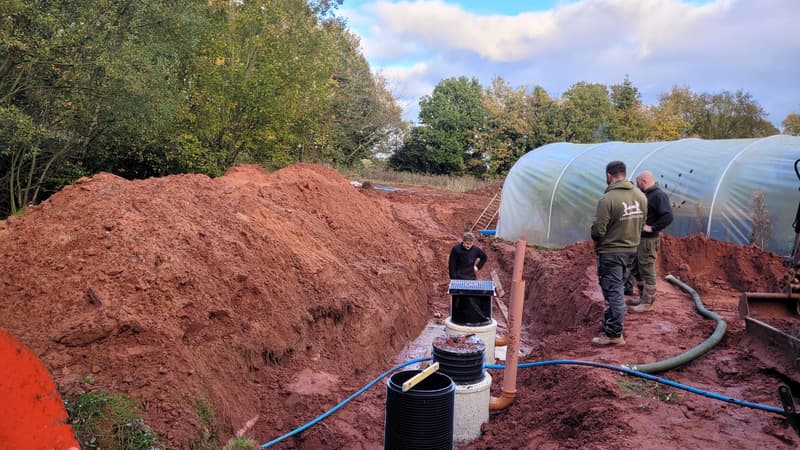
What you're really paying for is the work around it. Alton Facility Services says a proper quotation should list these items separately:
- emptying the old tank by tanker, then removing or filling it;
- excavation, and disposal of the spoil;
- supplying and installing the new tank;
- new pipework from the house and to the outlet;
- any electrical work (for pumps, alarms or a treatment plant);
- commissioning and reinstatement of the garden or driveway.
If a quote is a single figure with no breakdown, ask for one. It's the easiest way to compare installers fairly and to spot what's been left out.
The drainage field decides most of the bill
The drainage field (sometimes called a soakaway) is the network of perforated pipes in gravel trenches that lets treated effluent soak into the ground. If yours still works, keeping it is the single biggest saving you can make. If it has failed, or there never was a proper one, you'll almost certainly need a new field, and that's where costs jump.
- A new drainage field typically costs £3,000–£7,000 for a domestic property (Clear Stream Drainage). Fastfix Drainage in Bristol advertises from £3,500 for a 1–3 bedroom property and from £4,500 for 4 or more bedrooms, including percolation testing and design.
- A percolation test, which measures how fast water drains through your soil, costs around £300–£500 on its own (Clear Stream Drainage). It decides whether a drainage field is possible at all and how big it must be.
- If the ground fails the test, which is common in heavy clay, a drainage field may not be an option. The usual alternative is a sewage treatment plant, which produces cleaner effluent and can often discharge to a ditch or stream with the right authorisation.
Signs that the field rather than the tank is the problem include sewage smells, boggy or unusually green patches over the field, and pools of water around the outlet. GOV.UK lists sewage smells and pools of water around the drainage point among the signs that a system must be repaired or replaced (general binding rules for discharges to ground).
Septic tank or treatment plant: which replacement do you need?
Sometimes replacing like with like isn't allowed. In England, a septic tank must not discharge directly to surface water such as a ditch, stream or river under the general binding rules for surface water discharges. If that's how your current tank works, GOV.UK says you must connect to a public foul sewer, replace the tank with a small sewage treatment plant, or install a drainage field so it discharges to ground instead.
Treatment plants cost more. Merchants list 6-person units from about £2,192 inc VAT for a Marsh Ensign up to £4,955 inc VAT for a Klargester BioDisc, and the manufacturer Tricel puts installation at £2,000–£8,000 on top of the unit. Fully installed, a domestic plant is commonly £7,500–£15,000: Alton Facility Services puts it at around £6,000–£15,000+ and The Sewage Guy at £10,000–£15,000. They also need electricity and an annual service, which Alton Facility Services puts at around £100–£300 a year. Our sewage treatment plant cost guide has the full breakdown.
If your tank is sound but discharges to a ditch, converting it can be cheaper than a whole new plant. The Sewage Guy, a treatment plant servicing firm, puts a typical conversion at around £5,000 + VAT. Under GOV.UK's rules, a secondary treatment unit fitted after the tank must meet the relevant British Standard (BS EN 12566-6), and a retrofit system installed inside the tank after 2007 needs an environmental permit.
Permits, approvals and fees by nation
Regulatory costs are small next to the building work, but leaving them out can delay the job or cause problems when you sell.
- England: GOV.UK says you need appropriate building regulations approval, and planning permission where necessary. If your discharge started before 1 January 2015 and the replacement stays within 10 metres of the old discharge point, doesn't switch from surface water to ground and doesn't raise the volume above 2 cubic metres (2,000 litres) a day to ground, it still counts as an existing discharge (GOV.UK). See our guide to England's general binding rules.
- Scotland: every private sewage discharge needs authorisation from SEPA, and SEPA's registration fee for a small sewage discharge is £198.55. You don't need to change your registration to replace a system with one giving the same level of treatment, or to swap a septic tank for a package treatment plant. You need a new registration if you move the outfall more than 10 metres or change where it discharges, for example from a soakaway to a watercourse (SEPA). A new or replacement system also normally needs a building warrant from your council (SEPA). More in our Scotland and SEPA guide.
- Wales: most systems need a free, one-off exemption registration with Natural Resources Wales, plus building regulations approval. If it discharges to a watercourse, NRW will only register a package treatment plant, not a septic tank (NRW).
- Northern Ireland: you need consent to discharge from NIEA (part of DAERA), which can take up to four months, plus Building Regulations approval from your council. See Wales and Northern Ireland rules.
Ask whether your installer handles these applications and whether the fees are in the quote. Many do, but not all.
What pushes a quote up (or down)
Installers consistently point to the same handful of factors:
- Ground conditions. Rock, dense clay and a high water table all mean more excavation, more stone and sometimes a pumped system. Clear Stream says complex installations on granite bedrock or clay soils regularly exceed £12,000.
- Access. If a digger and a tanker can't get close, expect extra labour, smaller machines and longer on site.
- Household size. A bigger household needs a bigger tank and a longer drainage field. Fastfix's drainage field starting prices rise from £3,500 to £4,500 at four bedrooms, for example.
- The old tank. It has to be emptied by a registered waste carrier, then removed or broken up and filled.
- Where the effluent goes. Discharging to a watercourse usually means a treatment plant rather than a septic tank, which costs more.
- Reinstatement. Relaying a driveway or patio over the new system adds cost; reseeding a lawn adds very little.
Is it a replacement, or just an empty and a repair?
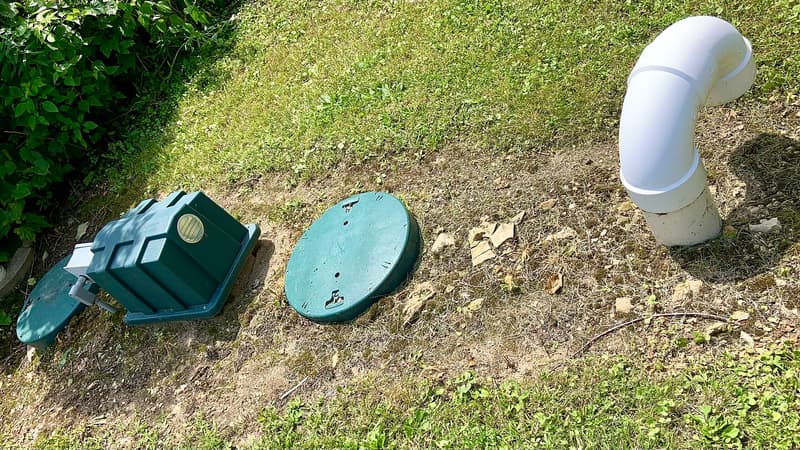
Before you commit thousands of pounds, rule out the cheaper causes. An overdue empty or a blocked pipe can produce the same slow drains and smells as a failed tank. Emptying is relatively cheap: Scottish Water's household scheduled de-sludge is £254.40 for 2026–27, and NI Water offers one free discretionary empty in any 12-month period if its conditions are met. In England and Wales you'll use a private tanker firm.
A good installer will inspect the tank and drainage field and tell you which part has failed. If someone recommends a full replacement without looking at the drainage field, get a second opinion.
How to get an accurate price
- Find out what you have. Tank type and size, where it discharges, and whether there's a drainage field. Old paperwork, the property's sale pack or your SEPA or NRW registration, or NIEA consent, may say.
- Get two or three site-visit quotes. Prices vary with the ground, so a quote without a visit is only a guess.
- Ask for an itemised breakdown covering the tank, groundwork, drainage field, decommissioning, approvals and reinstatement.
- Check the replacement is compliant for your nation and discharge route, and who is applying for the registration or permit.
If you'd like to compare prices, you can request free quotes from local installers using the form on this page. For a fuller cost table, including emptying and conversion units, see our septic tank replacement cost guide or read more about septic tank replacement.